Introduction
If you work in food manufacturing, you already know this uncomfortable truth: buying the wrong metal detector doesn’t fail quietly. It fails loudly—with false rejects, production downtime, wasted product, angry auditors, and in the worst case, a recall that lives on the internet forever.
I’ve spoken to plant managers who still remember the exact day a cheap metal detector cost them a major retail contract. One false sense of security. One overlooked detail. One painful lesson.
This guide exists so you don’t repeat that mistake.
Whether you’re producing salty snacks, moisture-heavy bakery items, or foil-wrapped convenience foods, this is your 2026 checklist for selecting a metal detector that actually protects your Critical Control Point (CCP)—not just ticks a box.
Why Your Next Metal Detector Purchase Is a Critical Control Point (CCP)
Let’s start with reality.
Snack manufacturing is brutal on detection systems. Salt. Moisture. Seasonings. Foil packaging. Fast line speeds. Tight margins. The infamous product effect is always working against you.
A low-quality metal detector might pass a demo… and then reject 3% of your good product once installed. That’s not safety. That’s chaos.
This is why choosing an Industrial conveyorized metal detector food industry solution isn’t just a purchasing decision—it’s a brand protection strategy.
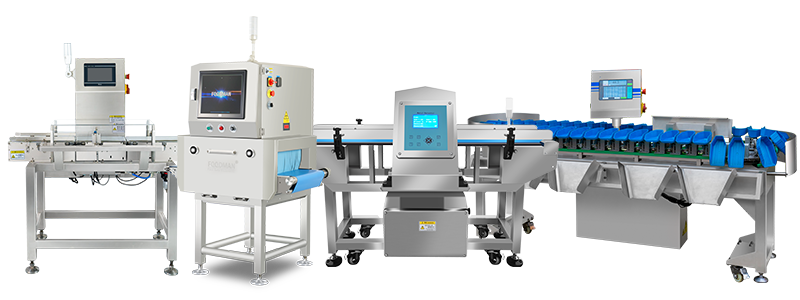
At Easyweigh, we specialize in HACCP compliant metal detection system designs built specifically for high-challenge food applications. Our systems are engineered to pass audits, survive sanitation, and—most importantly—perform consistently on real production lines.
And yes, auditors do notice the difference between a basic detector and a BRC IFS certified metal detector.
Section 1: Product & Packaging Compatibility – Defeating False Rejects
Stop the False Alarms: Matching Metal Detector Technology to Your Snack Product
False rejects are morale killers. Operators lose trust in the machine. Supervisors override alarms. That’s when risk creeps in.
Let’s stop that at the source.
Question 1: How does your Multi-frequency metal detector for snacks handle the product effect?

This is the question snack manufacturers must ask.
High salt content and moisture generate signal noise that confuses basic detectors. A Multi-frequency metal detector for snacks uses multiple frequencies to separate product signal from metal contamination.
Here’s the difference in real terms:
Single-frequency detector: “Something changed—reject it.”
Multi-frequency detector: “That’s just salt—keep it moving.”
At Easyweigh, we always recommend a live product test using your real sample. If a supplier won’t test your product, walk away.

Foil changes everything.
Standard detectors struggle because aluminum looks like metal (because it is metal). This is where
technology becomes essential.
A dedicated Ferrous-in-foil metal detector focuses on detecting steel contaminants while ignoring the foil background. It’s ideal for snack bars, sachets, and ready-to-eat meals.
And yes—sometimes the right answer is X-ray instead. A good supplier will tell you honestly, not force a bad fit.
Question 3: Will it integrate with our VFFS packaging line?
If you run VFFS, this question is non-negotiable.
A Vertical form fill seal (VFFS) throat metal detector installs directly at the forming tube, catching contamination before the product is sealed.
The benefit?
- No wasted packaging
- Faster rejection
- Cleaner audit trail
Easyweigh engineers design metal detector systems that integrate cleanly with existing VFFS machines—no duct tape solutions, no awkward retrofits.
Section 2: Technical Specifications & Compliance – The RFQ That Actually Matters
Non-Negotiable Metal Detector Specifications
Spec sheets matter—but only if you know what to ask for.

Ask for numbers. Always.
A serious supplier will specify detection sensitivity by metal type and aperture size. For example:
- Fe: 0.8 mm
- Non-Fe: 1.0 mm
- SS304: 1.5 mm
If someone says, “It depends,” without offering a test, they’re not ready for real production.
Your metal detector is only as good as its weakest sensitivity point.
Question 5: Can the machine survive our sanitation process?
Let me guess:
Hot water. High pressure. Foam. Chemicals.
Then you need a Washdown IP54 metal detector.
Anything less will corrode, short, or fail prematurely. Trust me—I’ve seen control panels filled with water like fish tanks.
An IP54-rated metal detector is designed for full washdown environments and extreme hygiene expectations.
Question 6: Does it support Auto-learn and performance verification?
Modern production lines change products constantly. Manual retuning wastes time.
An Auto-learn product compensation metal detector automatically adapts to new products while maintaining sensitivity.
Bonus points if it also supports automated Performance Verification (PV):
- Scheduled test reminders
- Logged test results
- Audit-ready reports
This turns compliance from a headache into a background process.
Section 3: The Global Edge – Support, Data & Traceability

Beyond the Metal Detector: What Happens After Installation?
This is where many suppliers disappear.
Question 7: Do you provide remote diagnostics and local support?
If your line is down at 2 a.m., you don’t want to wait for an email reply.
A Remote diagnostics industrial metal detector allows engineers to:
- Access parameters remotely
- Diagnose faults instantly
- Reduce downtime dramatically
Easyweigh supports global customers with regional service coverage, spare parts availability, and multilingual HMIs.
That matters more than you think.
Question 8: What traceability data does the system log?
Auditors love data.
A BRC IFS certified metal detector should log:
- Event history
- Reject counts
- Test piece verification
- Operator access changes
This data proves you didn’t just install a detector—you manage it.
Question 9: How secure is the rejection system?
Rejection isn’t just mechanical—it’s procedural.
Ask about:
- Reject confirmation sensors
- Lockable reject bins
- Alarm escalation if reject fails
Your metal detector must physically prevent contaminated product from re-entering production.
The Human Factor: Why Operators Love (or Hate) a Metal Detector
Here’s something buyers often forget.
If operators hate the machine, they’ll find ways around it.
Touchscreen clarity. Simple menus. Clear alarms. These things matter. Easyweigh designs metal detector HMIs for real humans, not engineers in lab coats.
When operators trust the system, compliance becomes natural—not forced.
Real-World Scenario: A Snack Line Transformation
One Easyweigh customer was producing seasoned chips in foil packs. Their old detector rejected 1 in 40 good packs.
After upgrading to a Multi-frequency metal detector for snacks with Ferrous-in-foil metal detector capability, false rejects dropped by 92%.
Same product. Same line. Different metal detector. That’s the power of asking the right questions.
Question 10: Why BRC & HACCP Are Non-Negotiable
Retailers don’t negotiate food safety anymore.
If your metal detector isn’t part of a HACCP compliant metal detection system, you’re one audit away from trouble.
Easyweigh systems are designed from day one to align with:
- HACCP
- BRC
- IFS
Global food safety requirements. Compliance isn’t an add-on. It’s built in.
Future-Proofing Your Investment
A good metal detector should last 10–15 years.
That means:
- Software upgrade capability
- Spare parts continuity
- Remote diagnostics readiness
Cheap systems become expensive very quickly.
Final Checklist: Your 10 Must-Ask Questions (Quick Recap)
Can it handle product effect?
Does it work with foil?
Integrates with VFFS?
Proven sensitivity levels?
IP69K washdown rating?
Auto-learn product compensation?
Remote diagnostics available?
Full traceability data?
Secure rejection system?
Certified for BRC/HACCP?
If any answer is unclear—pause the purchase.
Conclusion
In 2026, guessing is not good enough.
Easyweigh doesn’t sell generic solutions. We design Industrial conveyorized metal detector food industry systems built for real products, real challenges, and real audits.
Don’t guess your compliance.
Contact Easyweigh today for a free on-site product test and find out exactly what level of detection your line truly requires.
Your brand—and your customers—deserve nothing less.
FAQs
What is an industrial conveyorized metal detector used for in the food industry?
An Industrial conveyorized metal detector food industry solution is designed to inspect products as they move along a production line. It detects metal contaminants such as ferrous, non-ferrous, and stainless steel before products reach consumers. These systems are essential for maintaining food safety, meeting regulatory requirements, and protecting brand reputation, especially in high-volume snack, bakery, and ready-meal production.
Why do snack manufacturers need a multi-frequency metal detector?
Snack products often contain high levels of salt, seasoning, or moisture, which can confuse standard detectors and cause false rejects. A Multi-frequency metal detector for snacks uses multiple inspection frequencies to separate the product signal from metal contamination. This significantly reduces false alarms, increases line efficiency, and improves overall detection accuracy.
What is a VFFS throat metal detector and when is it needed?
A Vertical form fill seal (VFFS) throat metal detector is installed directly at the forming tube of a VFFS machine. It inspects product before the package is sealed, preventing contamination from being trapped inside. This setup reduces packaging waste, improves rejection accuracy, and is commonly used in snack, powder, and granular food applications.