
Introduction
Whether you run a fruit processing plant for canned, dried or puréed fruit, you are also keenly aware of how slim the margin is. From the tackiest of syrups to ultra-high-acid products, to high-speed fillers for rigid and flexible containers – your production environment is a constant atointest to durability and capability. Throw global exports into the mix and the stakes only get higher: one contamination event or labeling error may lead to recalls across continents.
Here’s where checkweighing and X-ray inspection graduate from good ideas to straight-up Critical Control Points (CCPs) under HACCP. Not only does equipment need to work without a hitch, it also needs to withstand intensive washdowns, comply with OIML R51 legal metrology standards and seamlessly link to your digital traceability systems.
Your 2026 procurement checklist: How to choose IP69K checkweighers, x-ray Your definitive checklist for procurement in the world of IP69K checkweighers and X-ray inspection systems for canned fruit– meeting compliance capabilities, achieving productivity and securing long-term ROI across your various export markets.
I. Hygiene and Durability (IP69K & Washdown)
Surviving the Washdown: IP69K Certification is Important

If you’ve ever walked through a fruit plant during end-of-shift cleanup, you’ve seen the sheer force of industrial washdowns—high-pressure sprays at nearly boiling temperatures, foaming detergents, and acidic residues. In tropical climates like Southeast Asia, or high-humidity regions in LATAM and Eastern Europe, this harsh environment can corrode metal and ruin electronics in months.
IP69K certification represents the highest level of waterproofing currently available on the market. While IP65 or IP66 ratings already provide “waterproof” characteristics, IP69K is specifically designed to withstand high-pressure, high-temperature cleaning. For fruit processors dealing with sticky purées or syrup-packed pineapple cans, this protection ensures the machine keeps running even after daily deep cleans.
A dynamic checkweigher IP69K washdown model should feature full stainless-steel construction (minimum SUS 304) and a hygienic design checkweigher frame—sloped surfaces for drainage, no horizontal ledges for bacterial buildup, and minimal crevices. A truly washable design means every component, from load cells to control panels, is sealed against water ingress.
Before purchase, always ask:
“What is the system’s IP rating, and is the construction fully compliant with hygienic design standards?”
This single question separates true hygienic design checkweighers from those merely advertised as “washdown safe.” When you’re operating in regions where hot water sanitation is mandated daily, only high
Maximize Profits with Dynamic Checkweighing and AMWC (OIML R51)

Speed vs. Accuracy
In fruit packaging lines, speed and accuracy are in constant tension. When you’re filling 200 jars of diced mango per minute, even a few grams of overfill per jar can translate to tons of lost product each month. Conversely, underfilling means non-compliance and rejected batches.
The solution lies in investing in a high-speed checkweigher for canned fruit that can maintain ±0.1g accuracy at 200 PPM (packs per minute). This precision requires industrial dynamic checkweighers equipped with advanced vibration compensation and high-resolution load cells.
As you evaluate suppliers, ask:
“How does your dynamic checkweigher maintain ±0.5g accuracy at our required line speed?”
The answer should include a discussion of the Speed/Accuracy Trade-off Chart—a standard graph every reputable manufacturer provides. It shows how precision declines as throughput increases. A robust OIML R51 checkweigher should maintain accuracy even at higher speeds, ensuring compliance with legal metrology standards.
A consistent checkweighing system that maintains tight tolerances enables you to pack confidently within specification limits, reducing product giveaway and ensuring export compliance is maintained.
Legal Metrology & Give-Away
When selling pre-packed fruit in international markets, you’re subject to trade metrology laws. That’s where OIML R51 and MID-certified checkweighers come into play.
“Is the checkweigher legally certified for trade usage (OIML R51 compliant) in your country?”
This is the question every foreign processor must ask. OIML R51 ensures that your weight measurements are recognized across borders—critical when exporting to the EU, LATAM, or Southeast Asia, where regulations differ.
Equally important is AMWC—Automatic Mean Weight Correction. This feature automatically adjusts filler output based on feedback from the checkweigher. If the filler starts to overfill slightly, AMWC corrects it in real time, reducing product giveaway.
This single feature can generate measurable ROI. For example, if your plant fills 100,000 jars a day, even a 0.1g overfill equals 50 kg of lost product daily. At $3/kg, that’s $150 per day—or nearly $55,000 a year. Implementing automatic mean weight correction (AMWC) cuts that waste instantly.
When combined with OIML R51 checkweigher accuracy, you achieve legal compliance, customer satisfaction, and maximum yield—a trifecta that directly impacts profitability.
III. Foreign Body Detection (X-Ray is Essential)
Beyond Metal: Why X-Ray Trumps Metal Detectors for Canned and Dried Fruit

When it comes to contamination control, metal detector have long been the go-to. But if your fruit is packaged in metal cans, glass jars, or aluminum-laminated pouches, standard detectors fail—metal packaging causes interference, and product moisture can create false rejects.
That’s why modern processors are transitioning to X-ray inspection systems for canned fruit. These systems detect not only metal but also glass shards, stones, and dense organic contaminants like calcified bone or hard fruit pits.
“For our canned/jarred fruit line, what specific X-ray technology ensures reliable detection of glass shards, stone, and calcified bone fragments?”
The answer lies in density difference detection. X-rays penetrate the product and create grayscale images based on density. Contaminants with higher or lower densities than fruit (like glass or metal) stand out clearly.
Unlike metal detectors, X-rays aren’t affected by product moisture, salt content, or packaging material—making them ideal for foreign body detection in high-moisture food.
Sensitivity and Aperture
When evaluating an X-ray inspection system for canned fruit, sensitivity matters most. A good benchmark is:
Detect Φ1.0mm glass,
Φ1.5mm stainless steel,
And Φ2.0mm stone contaminants.
Remember: the aperture size directly affects sensitivity. The smaller the gap between the X-ray source and detector (relative to product height), the better the detection capability.
In SE Asia, where fruit types vary from soft lychee to dense pineapple, optimizing for correct aperture and density calibration is key. In LATAM, high-pulp mango purées require careful contrast tuning to identify non-metallic fragments. And in Eastern Europe, where export standards mirror EU HACCP rules, accurate documentation of sensitivity verification is mandatory.
Combo Systems for Space Saving
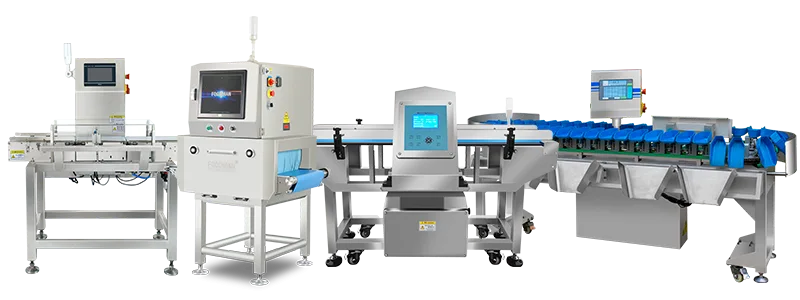
Space is often at a premium, especially in older fruit factories. That’s where a combo checkweigher and X-ray system comes into play. By integrating both inspection technologies into a single frame, you reduce footprint, minimize cabling, and simplify maintenance.
A combo checkweigher and X-ray system also streamlines your HACCP validation, as both weight and contaminant checks can be documented in one unified report.
Modern designs even include remote diagnostics and data export via Ethernet or OPC UA, allowing your QA team to monitor both weight accuracy and contamination detection from one dashboard.
If your plant exports to multiple countries, this combination system is a game changer for audit compliance and operational simplicity.
Global Procurement and Total Cost of Ownership (TCO)
The Foreign Buyer’s Dilemma: TCO, Serviceability, and GEO-Targeting
Buying high-tech inspection equipment is more than comparing price tags. The real cost lies in the total cost of ownership (TCO)—a sum of purchase, maintenance, downtime, and after-sales support.
If you’re a fruit exporter in SE Asia, downtime means missed shipment windows. In LATAM, logistics delays can stretch lead times. In Eastern Europe, warranty claims can be slowed by border bureaucracy.
So before signing that purchase order, ask:
“Do you have a certified local service and calibration partner in our country, and what’s your guaranteed response time for breakdowns?”
A checkweigher service partner in your region ensures faster support and compliance with OIML R51 recalibration standards. It also strengthens your HACCP documentation trail—vital for maintaining certifications during audits.
Integration & Traceability
The next question to ask is:
“Can the machine communicate via Ethernet or OPC UA to our plant MES/SCADA system for full HACCP traceability?”
This feature separates legacy hardware from modern Industry 4.0 equipment. Advanced IP69K checkweighers and X-ray inspection systems now offer remote diagnostics, automated reporting, and digital audit trails.
By integrating inspection data into your MES/SCADA system, you gain real-time visibility into production efficiency and contamination trends. That’s not just compliance—it’s strategic insight.
Utilities & Installation
A surprisingly common procurement mistake is overlooking local utility requirements. Voltage mismatches, incompatible wiring, or incorrect air supply can destroy delicate sensors or electronics before the first shift begins.
Always confirm:
Voltage: 400V/50Hz (Europe standard) or 380V/60Hz (LATAM/SE Asia).
Air Pressure: Check compressor capacity to meet pneumatic reject systems.
This attention to detail prevents costly installation issues and supports long-term reliability. When calculating total cost of ownership checkweigher performance, factor in local spare parts, training, and calibration intervals.
Conclusion
By now, you’ve seen that the right checkweighing and X-ray systems go far beyond compliance—they’re investments in efficiency, brand reputation, and export success.
A successful procurement strategy for 2026 is not about finding the lowest price. It’s about securing the highest TCO value through:
IP69K hygiene and washdown durability (for longevity and food safety),
AMWC profitability (for precision and waste reduction),
X-ray protection (for contamination-free exports), and
Localized service support (for sustained uptime).
Before finalizing your next equipment purchase, revisit these 10 must-ask questions:
- What’s the system’s IP rating?
- Is it built to hygienic design standards?
- How does it maintain accuracy at our required speed?
- Is it OIML R51 checkweigher certified?
- Does it include automatic mean weight correction (AMWC)?
- What X-ray technology ensures detection of glass and stone
- What’s the verified sensitivity and aperture size?
- Can we install a combo checkweigher and X-ray system?
- Is there a local checkweigher service partner?
- Can it integrate with our MES/SCADA system for HACCP traceability?
The answers will determine not only your compliance level but also your competitive position in export markets.
Ready to stop product giveaway and eliminate recall risk? Request a free, no-obligation product test with WEIGHTSORTING today. Validate the exact X-ray sensitivity and checkweighing accuracy for your canned or dried fruit product—and secure your 2026 advantage in global fruit exports.
Because when your brand’s reputation rides on every jar, pouch, or can, only the best IP69K checkweigher and HACCP-compliant X-ray inspection system will do.
FAQs
What makes an IP69K checkweigher essential for fruit processing factory?
An IP65K (IP66K/IP69K) checkweigher is designed to handle the high-pressure, high-temperature washdowns required in fruit production. The IP69K rating ensures complete protection against water and chemical ingress, meaning your checkweigher remains reliable even in the sticky, acidic environment of canned and puréed fruit processing.
Why choose X-ray inspection instead of metal detection for canned fruit?
A standard metal detector struggles with metal packaging interference and high-moisture products. An X-ray inspection system for canned fruit detects non-metallic contaminants like glass shards, stones, or bone fragments by measuring density differences—making it more reliable for ensuring HACCP-compliant quality control.
How can I request a performance test for my product?
You can schedule a free product test with WEIGHTSORTING to verify X-ray sensitivity and checkweighing accuracy for your specific canned or dried fruit product. This no-obligation test demonstrates real detection and weight-control performance before procurement.