Introduction
In the highly competitive landscape of modern food manufacturing, operational flexibility is no longer just an advantage—it is a requirement. Global food processing facilities are rapidly transitioning away from dedicated single-product manufacturing setups toward dynamic, agile spaces capable of managing multiple Stock Keeping Units (SKUs) on a single conveyor line. For production managers, engineers, and supply chain directors, this shift introduces a critical engineering puzzle: Can AI sorting machines truly handle mixed SKU sorting without compromising accuracy or bottlenecking production throughput?
Historically, deploying a traditional optical sorting machine or an early-generation CCD sorting machine meant locking your facility into strict, rigid processing rules. Older systems relied heavily on fixed pixel thresholds and basic color channels. If your plant needed to switch from processing red apples to green pears, or from sliced carrots to diced potatoes, operators had to shut down the line, perform extensive mechanical adjustments, and manually recalibrate the inspection software.
Today, the emergence of next-generation AI Sorting Technology has completely rewritten the manufacturing playbook. At Easyweigh and Foodman, we design advanced industrial food sorting equipment engineered specifically to solve complex manufacturing challenges. This extensive technical guide explores how modern AI sorting machines adapt to mixed SKU runs, analyzes the software intelligence behind instant recipe switching, and provides a comprehensive look at optimizing your production facility for maximum yield.
What Is Multi-SKU Sorting in Modern Food Production?
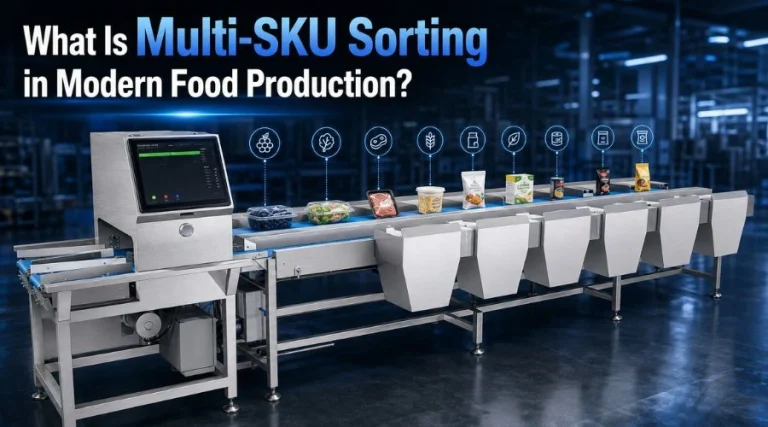
To fully understand how a modern AI sorting machine handles diverse product matrices, we must first define the concept of multi-SKU sorting within a live manufacturing facility. In past decades, factories optimized efficiency by running massive, identical batches of a single product. However, modern consumer habits demand a vast array of packaging sizes, flavor profiles, and mixed product configurations.
Multi-SKU processing involves running non-uniform product streams—such as mixed root vegetables, varied seafood catches, or assorted fruit varieties—along the same production channel simultaneously or in quick succession. When executing this via automated optical sorting, the underlying software faces an incredible data processing challenge. The food sorting machine must inspect a fast-moving, chaotic stream of items, identify the distinct physical boundaries of each product type, analyze them for structural defects, and route them to their matching packaging areas.
When a facility relies on an outdated optical sorter machine configuration, running mixed SKUs inevitably causes a sharp drop in sorting capacity and an unacceptable rise in false rejects. Because traditional systems lack the contextual understanding to differentiate between an intentional product variation (such as a structural change between a sliced and a diced vegetable) and an actual foreign contaminant, good product is often mistakenly blown into the waste stream. Overcoming this bottleneck requires an intelligent sorting system capable of analyzing items as complex, multi-dimensional shapes rather than simple colored pixels.
AI Sorting Model Adaptability Across Product Variations
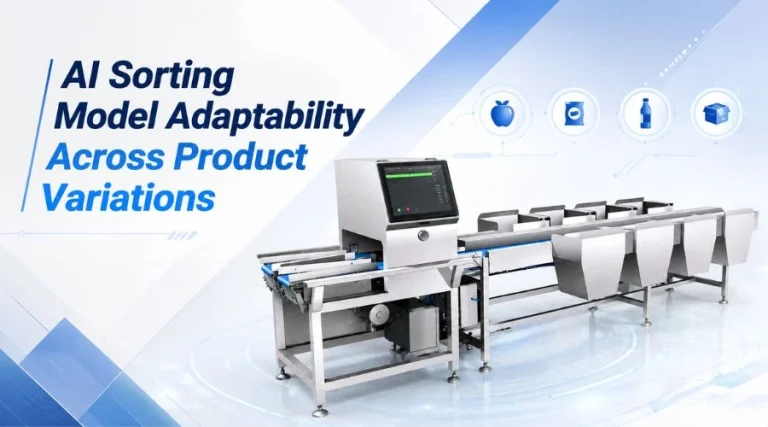
The core engine driving the flexibility of modern AI sorting machines is software driven by machine learning sorting and deep learning sorting architectures. Rather than executing a simple checklist of pre-programmed sorting rules, an advanced AI food sorting machine acts as a cognitive image recognition platform.
When a mixed product stream passes through the scanning zone of a high-speed vision sorting machine, an integrated vision inspection system captures a multi-spectral image array of every single item in milliseconds. The deep learning sorting model processes these image files through thousands of interconnected neural nodes, evaluating subtle variations in surface texture, volumetric density, aspect ratio, and external color gradients.
This advanced pattern recognition allows an industrial vision sorting platform to maintain an exceptional level of sorting accuracy even when product profiles shift unexpectedly. For example, on a high-throughput seafood sorting machine line, the neural model understands the unique biological differences between various marine items. It recognizes that a slight shape or color variance in a shrimp tail is a natural anatomical feature, while a similar variance on a fish fillet might indicate a serious quality defect.
By applying this continuous, context-aware analysis, the machine stabilizes its sorting sensitivity dynamically, allowing processing plants to run diverse product matrices together without experiencing a spike in product giveaway.
Recipe Switching and Parameter Auto-Adjustment
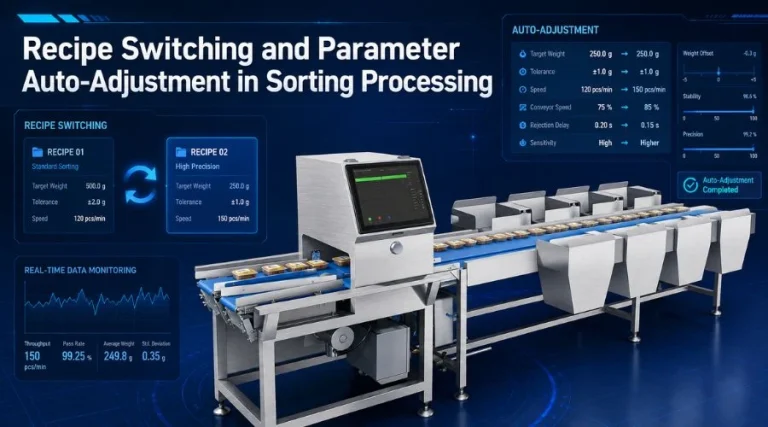
For facilities dealing with rapid order changes, the total time required to reconfigure machinery between batches directly alters daily profitability. This is where a true optical optical sorter comparison highlights the operational advantages of next-generation AI Sorting Technology.
Traditional sorting systems require manual engineering intervention during a product changeover. Operators must adjust physical lighting angles, manually re-calculate exposure parameters, and load entirely separate software code blocks. This manual calibration process can easily drain 30 to 45 minutes of valuable production time per shift, creating an expensive bottleneck across your packaging facility.
In contrast, a modern design vision sorting machine utilizing an integrated vision inspection system eliminates changeover downtime through automated parameter auto-adjustment. When a new product SKU is introduced onto the line, the intelligent sorting system can read an upstream barcode or automatically detect the shifting product characteristics via its initial Vision Inspection loop.
Once the new SKU profile is recognized, the machine instantly morphs its digital sorting filters, adapts its air-blast valve timing, and fine-tunes its camera sensitivities on the fly. This seamless recipe switching allows processing plants to maintain continuous, high-volume manufacturing runs, maximizing daily sorting capacity and drastically shortening the equipment’s financial payback period.
Sorting Performance Consistency Across SKUs
The ultimate test of any automated inspection line is its ability to deliver uniform sorting accuracy across vastly different product configurations. Maintaining this consistency requires tight integration between advanced multi-spectral sensors and responsive mechanical rejection components.
When an optical sorting equipment array is configured to inspect a diverse material mix—such as transitioning from a heavy vegetable sorting machine matrix to a delicate fruit sorting machine run—the system must adjust its kinetic parameters alongside its software models. If the pneumatic ejector valves fire with too much force during a delicate blueberry sorting machine or tomato sorting machine run, the air blast will bruise or split the fresh produce, ruining your final yield.
To protect product quality across all SKUs, premium AI sorting machines combine smart software with variable pneumatic controls. The AI food sorting machine calculates the physical mass and velocity of each item as it passes through the inspection zone.
If the system identifies a light, delicate berry on a blueberry sorting machine track, it automatically lowers the air pressure sent to that specific pneumatic valve. If the next item is a dense vegetable on a vegetable sorting machine line, the system instantly increases the pneumatic pressure. This continuous, real-time mechanical adaptation ensures that your line achieves optimal defect detection and exceptional waste reduction regardless of which SKU is currently crossing the conveyor bed.
How to Configure an AI Sorting Machine for Mixed SKU Production Lanes?
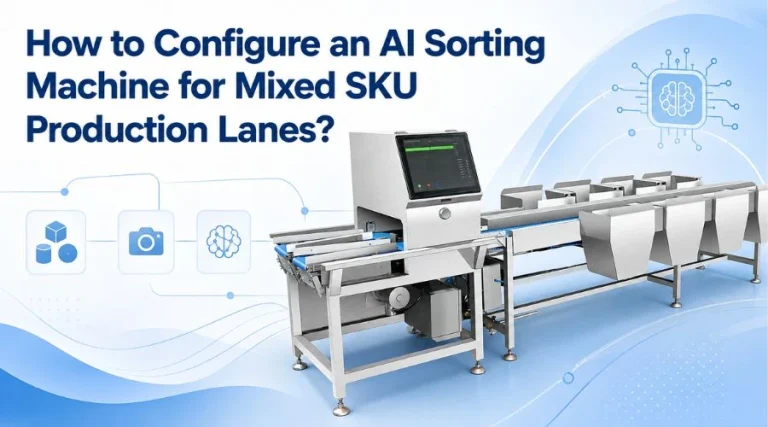
To successfully implement a flexible multi-SKU sorting strategy that preserves high throughput and keeps error rates low, technical teams should follow a standardized deployment process.
Step 1: Initialize the Multi-SKU Neural Network Training Array
Pass a diverse sample of your clean, premium-grade items from all target SKUs through the vision inspection system. Use the machine’s software controller to map the distinct variations in shape, color, and surface texture for each product type, establishing a comprehensive multi-SKU baseline within the deep learning model.
Step 2: Establish the SKU Segregation and Reject Routing Rules
Program your intelligent sorting system to define how each categorized item should be routed after crossing the sensor array. Map specific pneumatic ejector gates to match your various packaging channels, ensuring the automated optical sorting software knows exactly where to direct each distinct product variety.
Step 3: Calibrate Dynamic Pneumatic Pressure Controls
Adjust the system’s pneumatic air-blast pressure settings to match your product matrix—using lower, air-cushioned pressures for delicate fruit lines like a tomato sorting machine or fruit grading machine, and higher pressures for robust items like a heavy nut sorting machine. This prevents physical product damage during rejection events.
Step 4: Run Dynamic Validation Tests and Verify Performance Metrics
Execute a live test run by passing a mixed product stream containing all target SKUs through the optical sorting machine at maximum line velocity. Monitor the output channels to confirm that both your sorting accuracy and final waste reduction metrics meet your facility’s operational guidelines before initiating full-scale commercial production.
Best Industries for Multi-SKU Sorting Deployment
While almost any processing facility can benefit from increased production flexibility, several key sectors find the multi-SKU capabilities of advanced AI sorting machines absolutely essential to their business models.
The Fresh Produce Sector: Fruits and Vegetables
Agricultural packing houses must manage massive natural variations daily. A high-capacity fruit sorting machine, fruit grading machine, or specialized tomato sorting machine must classify items not just by weight, but by maturity levels, color profiles, and shape configurations simultaneously.
By utilizing an advanced optical sorting equipment layout, a single packing line can seamlessly transition between sorting apples, pears, and citrus fruits throughout the day, maximizing equipment utilization and delivering major labor savings.
High-Volume Commodity Sorting: Nuts and Dried Goods
On a high-speed nut sorting machine line, the equipment must identify and remove shell fragments, twigs, and internal mold defects across different nut varieties like almonds, walnuts, and cashews. A traditional optical sorter comparison reveals that old-fashioned systems struggle with the shifting dust and dust clouds generated by bulk nut lines.
Modern AI sorting machines use automatic lens-cleaning air knives alongside deep learning sorting models to look straight through airborne dust, maintaining pristine inspection quality without requiring frequent stops for manual cleanings.
Proteins and Cold Lines: Seafood and Frozen Foods
Processing items on a seafood sorting machine or a frozen food sorting machine introduces severe environmental challenges due to water spray and ice glazes. Surface water creates intense reflections that can blind standard camera arrays.
To overcome this, our advanced fish sorting machine and cold-line platforms integrate infrared sensors with an industrial vision sorting camera network. This allows the system to look past surface moisture, ensuring high-accuracy Vision Inspection whether your line is handling fresh fillets, frozen shrimp, or mixed seafood medleys.
Conclusion
Successfully managing a flexible, multi-SKU production line requires moving away from rigid, legacy sorting methods and embracing the adaptability of intelligent automation.
Advanced Software Adaptability: Implementing AI sorting machines driven by machine learning sorting software allows processing plants to run non-uniform product streams simultaneously without experiencing a drop in sorting precision.
Zero Changeover Downtime: Modern intelligent sorting system layouts adapt to shifting product profiles on the fly, eliminating the need for manual recalibrations and maximizing daily sorting capacity.
Protected Product Quality: Combining adaptive neural networks with variable pneumatic air valves ensures that delicate fresh produce is protected from bruising during high-speed rejection events.
Accelerated Financial Returns: Transitioning to next-generation automated optical sorting infrastructure secures long-term profitability by combining substantial labor savings with the precise waste reduction required to secure a rapid return on investment.
By pairing robust, washdown-safe hardware with the analytical power of an advanced AI food sorting machine, Easyweigh and Foodman ensure that modern food processors can confidently eliminate production bottlenecks, maintain absolute food safety compliance, and maximize long-term operational profitability.
FAQs
Can an AI sorting machine reliably handle a mixed SKU production line without dropping throughput?
Yes, modern AI sorting machines are engineered specifically to manage multi-SKU variations simultaneously. Unlike a legacy optical sorter machine that relies on rigid, static rules, an advanced AI food sorting machine processes items as complex, multi-dimensional shapes. By leveraging AI Sorting Technology, the system can immediately identify different product profiles on the same belt, ensuring that overall sorting capacity remains high and eliminating the need to stop the line for manual recalibrations.
How does an intelligent sorting system maintain high sorting accuracy during product changeovers?
An intelligent sorting system utilizes automated recipe switching and parameter auto-adjustment. When a new product SKU enters the line, the vision inspection system identifies the change via its initial Vision Inspection loop or an integrated barcode. The software then morphs its digital sorting filters and adjusts its air-blast valve timing on the fly. This seamless changeover preserves your sorting accuracy and keeps the false reject rate low without requiring manual engineering downtime.
Can bulk processing plants use standard food sorting equipment for high-dust lines like nuts?
Standard food sorting equipment often experiences a drop in sorting sensitivity when airborne dust builds up over the lens. When designing an optimal vision sorting machine or a high-capacity nut sorting machine, engineers include automated high-pressure air knives. These integrated air blasters automatically clear the glass faceplate protecting the optical sorting equipment lenses at scheduled intervals, allowing the food sorting machine to run continuously without manual cleaning stops.