
introduction
In the fast-paced environment of industrial protein and seafood processing, precision is directly tied to profitability. Plant managers and procurement officers frequently face a critical operational question: Can the dynamic weight grader maintain stable accuracy when processing wet, sticky, or vibrating products? At Easyweigh, we engineer solutions for the harshest factory floors. We know that a weight grader performing flawlessly in a dry test facility can struggle when introduced to live production variables like high humidity, brine, and structural floor vibrations. For operations specializing in the sorting and grading of fish, high-speed poultry portioning, or sticky marinated meats, maintaining structural and electronic stability is the difference between optimized yields and costly product giveaway.
This comprehensive guide delivers an in-depth, technical analysis of how advanced sorting machinery overcomes the physical and electronic challenges of challenging product profiles. We look closely at signal processing physics, mechanical dampening, and real-world applications—ranging from cold shrimp sorting to glazed proteins—to show how modern sorting machines protect your bottom line.
The Core Engineering Challenges of Sorting Machine
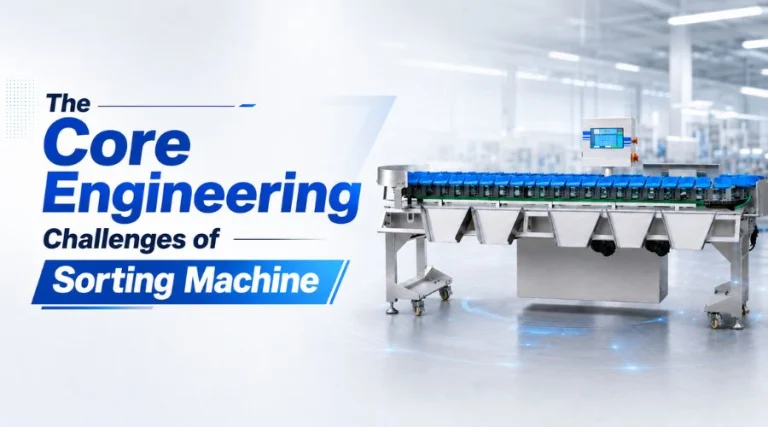
To understand how a weight grader maintains its accuracy, we must first address the physical disruptions that occur when a product crosses a dynamic load cell. Unlike static scales, a dynamic food sorting machine must calculate an object’s mass in milliseconds while it is moving. Four primary industrial factors threaten this process.
Product Bouncing and Kinetic Impact
When irregular items like frozen poultry pieces or irregular cuts drop from an infeed conveyor onto the weighing bed of a sorter machine, they create a kinetic impact. This impact causes product bouncing, which introduces mechanical noise into the load cell. If the sorting machine stabilization time is too slow, the item will exit the weighing bed before the scale can establish a true baseline, leading to mis-sorting.
Conveyor Contamination and Dynamic Tare
In sectors like sorting in food processing, lines are rarely clean for long. Juices, marinades, fats, and ice glaze accumulate on the weighing belt over time. This conveyor contamination continuously changes the base weight (tare) of the belt. Without a continuous, automated tare adjustment algorithm, a food sorting equipment setup will experience calibration drift, misinterpreting accumulated debris as actual product mass.
Water Vibration Interference
High-pressure washdowns and nearby heavy machinery (such as mixers, plungers, and injectors) introduce structural frequencies into the floor. In a seafood plant, this water vibration interference travels up the frame of the fish sorting machine, blending with the low-frequency signals generated by the load cell. Traditional sorting equipment cannot differentiate between the physical weight of a sorted fish and the background vibration of the factory floor.
Typical Difficult Products and Field Case Studies

Marinated Meat and Sticky Chicken
Marinated proteins are highly viscous. When processing seasoned beef strips or sticky chicken drumsticks, the meat tends to stick to the conveyor belts. This adhesion affects how the product transfers across conveyor gaps, causing the item to drag.
This dragging action alters the horizontal tension of the weighing belt, tricking the weight grader’s sensors. To prevent this, specialized sorting machinery must use hydrophobic, non-stick belts combined with high-frequency digital filters to isolate the vertical weight from horizontal drag forces.
Wet Seafood and Cold Shrimp Sorting

In the marine sector, fish sorting and cold shrimp sorting require handling high volumes of water. Free surface water on a food sorter creates a hydrodynamic lifting effect at high speeds.
When conducting the sorting of fish, water can pool under the product, cushioning its impact but extending the time required for the scale to stabilize. Our field data shows that a dedicated fish sorting machine must use perforated or slotted belts to allow excess water to drain instantly away from the weighing zone.
Frozen Fish and Glazed Products
Ice glazing protects seafood from freezer burn, but it introduces major weight variables. For lines running cold shrimp sorting or frozen fillets, the ice glaze can chip off onto the weighing track.
If a sorter machine relies on old-fashioned static tare calculations, these loose ice chips will distort subsequent measurements. The system’s digital signal processor must recalculate the zero-point between every single product package to ensure consistent sorting fish runs.
How to Optimize a Weight Grader for Unstable Production Lines

To maintain sub-gram accuracy in unstable environments, technical teams should follow a systematic optimization strategy.
You can integrate this step-by-step optimization checklist into your facility’s SOPs or engineering manuals using an Elementor “How-To” widget or a structured block format with the following steps:
Step 1: Isolate the Weight Grader Base
Mount the weight grader on vibration-dampening pads or structurally decouple its frame from neighboring heavy machinery like grinders or injectors. This minimizes structural floor frequencies before they reach the weighing bed.
Step 2: Configure Digital Low-Pass Filters
Access the controller software of your food sorting machine and set the digital low-pass cutoff frequency to block typical factory floor vibrations (usually between 10Hz and 50Hz). This isolates the true mass signal from environmental noise.
Step 3: Match Belt Speed to Stabilization Time
Adjust the conveyor velocity so each item remains on the weighing bed for at least 1.5 times the system’s minimum sorting machine stabilization time. This allows the load cell’s signal curve to settle into a clean, readable baseline.
Step 4: Program Automatic Dynamic Tare Cycles & Validate and Calibrate with Standard Test Objects
Enable the automatic tare interval within your sorting equipment settings. Program the software to recalculate the belt’s zero-weight baseline during gaps in product flow, instantly compensating for conveyor contamination like fat buildup or marinade accumulation.
Run certified test weights dynamically across the line at full production speed. Verify that the sorting machinery correctly routes the objects across different lanes with 100% accuracy before starting live product runs.
Engineering Solutions: Advanced Dampening and Signal Processing
Modern industrial sorting machines do not just rely on physical steel frames; they use advanced digital processing to maintain high accuracy.
Anti-Vibration Load Cells
Premium sorting equipment utilizes dual-beam or multi-axis load cells. One beam measures both the product mass and environmental vibration, while an isolated secondary reference beam measures only the background vibration. The internal computer subtracts the reference signal from the primary measurement, instantly removing floor noise from the final calculation.
Optimizing Stabilization Time
The faster a weight grader can stabilize, the higher your line speed can be. By combining lightweight carbon-fiber conveyor beds with high-frequency weight processors, modern sorter machines can reduce stabilization times down to less than 40 milliseconds. This rapid response allows a food sorting equipment setup to process up to 250 items per minute without losing accuracy.
| Product Type | Primary Challenge | Mechanical Solution | Digital Solution |
| Marinated Meat | Surface adhesion / Belt drag | Hydrophobic, non-stick belts | Horizontal tension compensation filters |
| Wet Seafood | Water pooling / Hydroplaning | Perforated drainage belts | High-frequency sampling arrays |
| Sticky Chicken | Product sticking / Delayed drop | High-speed mechanical scraper blades | Real-time dynamic tare tracking |
| Frozen Fish | Chipped ice accumulation | Enclosed self-cleaning pulleys | Multi-stage date weight sorting method |
Integrating the Date Weight Sorting Method for Full Traceability
In high-volume lines processing sorted fish or portioned poultry, capturing accurate weight is only half the battle. To meet strict modern food safety standards, manufacturers are implementing the date weight sorting method directly into their sorting system networks.
The date weight sorting method links chronological production timestamps and batch codes directly to the specific weight data recorded by the weight grader. If a downstream packaging defect or contamination issue is discovered, quality control teams can use this linked data to isolate the precise batch window.
Whether running a standalone food sorter or an integrated multi-lane conveyor line sorting system, this data link ensures that every sort fish run generates a complete, verifiable audit trail for regulatory compliance.
Conclusion: Main Points for Procurement
Maintaining stable weighing performance in challenging production environments requires a careful combination of physical isolation, smart software filtering, and hygienic design.
Managing Vibrations: High-frequency factory floor noise can be isolated by combining physical dampening mounts with dual-beam, anti-vibration load cells.
Controlling Contamination: Automated dynamic tare software is essential to prevent accuracy drift caused by fats, marinades, or ice buildup on the weigh belt.
Optimizing Stability: Matching your conveyor speed to the minimum sorting machine stabilization time allows the system to capture highly precise mass readings at maximum line speeds.
Application Matching: Using specialized hardware accessories—such as perforated drainage belts for wet seafood or non-stick surfaces for sticky chicken—protects product quality and helps maintain high yield rates.
By selecting robust sorting machinery engineered specifically to handle environmental noise and product moisture, food processors can eliminate unnecessary product giveaway, safeguard profit margins, and keep high-capacity production lines running efficiently.
Add Your Heading Text Here
How does a weight grader prevent water vibration interference during high-speed fish sorting?
During the sorting and grading of fish, high-pressure washdowns and nearby heavy machinery generate severe floor vibrations. A premium fish sorting machine uses dual-beam or multi-axis load cells to counteract this. While one beam measures the incoming sorted fish, a secondary reference beam measures only the background factory noise. The internal digital signal processor instantly subtracts the vibration frequency from the final mass calculation, allowing the food sorter to maintain sub-gram accuracy despite continuous structural movement.
What prevents a food sorting machine from losing accuracy due to conveyor contamination from sticky chicken or marinades?
In high-volume lines running sorting in food processing, oils, fats, and marinades continually coat the conveyor belts. This conveyor contamination alters the baseline tare weight. If using outdated sorter machines, this buildup leads to massive calibration drift. Modern sorting machinery utilizes a dynamic automatic tare algorithm that re-zeros the belt during small product gaps. This ensures that a food sorting machine always isolates the true weight of the product from any residual debris.
Can a standard fruit or vegetable sorter machine handle wet seafood or glazed frozen fish?
Repurposing a dry-commodity sorter machine for wet applications will inevitably cause data errors. Dry sorting lines are not equipped to handle hydroplaning or surface tension. When processing wet seafood or executing a sort fish run, excess water can pool under the product, creating a lifting effect that tricks standard sensors. A dedicated fish sorting machine relies on specialized perforated drainage belts and hydrophobic materials to allow liquids to shed instantly away from the load cell array.