
Introduction
In bulk solids and powder handling, balancing product safety with operational efficiency is a constant challenge. Processing facilities handling fine commodities face a unique set of challenges. Unlike packaged goods moving predictably on a conveyor belt, loose powders flow rapidly under the force of gravity. This makes standard contaminant inspection methods difficult to implement.
When fine materials drop through a pipeline, a specialized gravity-fall metal detector becomes the primary line of defense against physical contaminants. However, production managers often hesitate to deploy these systems due to a common operational concern: Will the rejection mechanism trigger excessive product waste during an intervention?
This comprehensive technical guide explores how a modern gravity-fall detector achieves maximum food safety compliance without sacrificing valuable yield. We will examine the physics of bulk inspection, mechanical parameters that reduce product loss, and industry-specific applications for processing plants worldwide.
The Mechanism of Action
The metal detection system consists of a high-sensitivity balanced coil system enclosed in a rugged housing, wrapped around a non-metallic throughput pipe. As the product drops through the aperture, it passes through a high-frequency electromagnetic field.
If a contaminant enters this field, it disrupts the electrical balance of the coil system. The digital signal processor (DSP) analyzes this disruption to determine what sets off a metal detector signal. If the signal passes a predefined threshold, a high-speed reject valve (such as a flap or cowl rejecter) activates instantly, diverting a precise pocket of contaminated material out of the primary product flow.
Common Industries: The Physics of Powder in Metal Inspection

Different powders exhibit distinct behaviors when passing through an electromagnetic field. Understanding these characteristics helps explain what can metal detectors detect in various production scenarios.
Flour and Bakery Milling
Flour milling operates at immense volumes. The primary challenge here is managing dust explosions and static electricity, alongside fine mechanical wear fragments from upstream milling sieves. A metal detector for food production line integration must handle a continuous, dense column of dry powder without restricting the throughput rate.
Spices present a high “product effect” due to natural mineral content, moisture levels, and high salinity. In metal detector food processing, product effect refers to a product’s tendency to mimic a metallic signal. Specialized metal detectors food processing software must use multi-frequency technology to cancel out the spice signal while maintaining high sensitivity to actual foreign bodies.
Protein Powder and Nutraceuticals
Protein powder processing demands pristine hygiene and zero contamination. Buyers in this sector frequently ask: Can metal detectors detect plastic or cors detect plastic particles? Standard electromagnetic metal detectors food safety systems cannot identify non-conductive plastics. However, they are highly critical for catching stainless steel (304 grade) shave-offs from blending paddles. For plastic detection, processors typically transition toward advanced X-ray inspection.
Coffee Production
Whether inspecting green beans or fine espresso grinds, coffee lines require robust metal detectors for the packaging industry and bulk processing. Ground coffee can be electrostatic, which requires a gravity-fall metal detector with an anti-static throughput tube to prevent clogging and erratic signals.
What Metals Can Be Detected by a Metal Detector?

When designing a quality control system, procurement teams must know what metals can be detected by a metal detector inside a falling column of powder. Metals are broadly categorized into three groups, each interacting differently with the magnetic field of a gravity-fall detector:
Ferrous Metals (Iron, Steel): Magnetic and highly conductive. They distort the electromagnetic field strongly, making them the easiest to detect.
Non-Ferrous Metals (Copper, Brass, Lead): Non-magnetic but highly conductive. A free fall metal detectors system catches these easily by sensing the eddy currents generated on their surface. This answers the common operational question: will a metal detector detect lead? Yes, it will.
Stainless Steel (Grade 304 and 316): Non-magnetic and poor electrical conductors. This is the hardest category to detect, requiring high-frequency coils and optimized software filters.
The Aluminum Question
A frequent point of confusion on the production floor centers around aluminum packaging materials:
Will aluminum set off a metal detector? Yes. Aluminum is highly conductive.
Does aluminum go off in metal detectors? Absolutely. Even small flakes of aluminum foil will trigger a detection signal.
Can a metal detector detect aluminum or can metal detectors find aluminum when it is mixed with dense powder? Yes, because aluminum creates strong eddy currents.
Does aluminum foil set off metal detectors? Yes, which is why bulk powder inspection must happen before the product enters an aluminum foil laminate pouch.
Parameters Buyers Care About: Reducing Product Loss %

To prevent excessive waste, a gravity-fall metal detector must combine high sensitivity with extreme mechanical speed. Buyers evaluating a metal detector for businesses handling powders focus on four critical performance parameters.
Reject Precision and Air-Blast/Flap Timing
The precision of the reject mechanism determines your product loss %. When a contaminant is detected, the reject valve must open, allow the contaminant to drop through, and close immediately. If the air-blast timing or flap actuation is delayed by even a few milliseconds, hundreds of grams of clean powder are dumped into the waste bin. Modern metal detectors food safety units use ultra-fast pneumatic actuators that open and close within 20 to 50 milliseconds.
Throughput Rate Optimization
A high throughput rate means product moves fast. If a gravity-fall metal detector processes 10 tons of flour per hour, any reject event will inherently drop more product than a line processing 1 ton per hour. To combat this, the valve geometry must be tightly matched to the drop height and material velocity.
Product Loss % Benchmarks
In high-volume lines, acceptable product loss per reject event is strictly monitored. By utilizing optimized mechanical gates, advanced systems limit product loss to less than 0.5% of the hourly throughput per actuation event, ensuring that only a minimal “plug” of powder is discarded.
System Configurations: Standalone vs. Combination Systems
Depending on plant layout, manufacturers choose between independent inspection loops or integrated combination units.
Standalone Gravity Systems
A standalone gravity-fall detector is placed directly beneath silo discharges, mixers, or before bagging stations. It is a dedicated solution focused entirely on bulk inspection.
Standalone Gravity Systems
A standalone gravity-fall detector is placed directly beneath silo discharges, mixers, or before bagging stations. It is a dedicated solution focused entirely on bulk inspection.
Conveyorized Inspection
For products already packaged in boxes or sacks, a conveyor metal detector or metal detector conveyor is used instead. A metal detector conveyor system transports finished items through a rectangular aperture.
The Power of Combination Systems
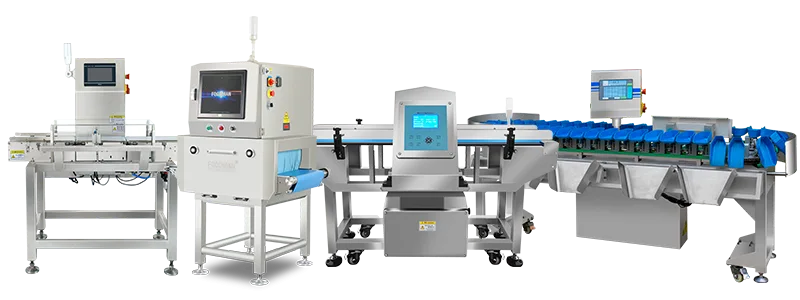
In modern packaging halls, space and data consolidation are vital. Integrating a checkweigher and metal detector on the same line creates a highly efficient validation point. Processors can implement a checkweigher with metal detector, checkweighers with metal detector, or a complete combination checkweigher metal detector system.
Choosing combination metal detection and checkweigher systems or a combination checkweigher with metal detector allows companies to verify package weight while ensuring no metal fragments entered during the final sealing process. This dual-verification architecture makes a metal detector and checkweigher combo a preferred choice among QA managers globally.
How to Set Up and Maintain a Gravity-Fall Metal Detector for Powders
To achieve peak accuracy with zero false alarms, proper calibration and physical installation are mandatory. This section details the proper optimization procedure.
Step 1: Eliminate Structural Interference & Calibrate the Product Effect Compensation
Ensure the throughput pipe is free from mechanical tension and isolated from surrounding plant vibrations. Metallic structures located too close to the aperture can cause erratic field distortions, triggering false rejects and causing massive product waste. Pass a continuous stream of clean powder through the gravity-fall metal detector. Use the system’s auto-learn function to measure the product’s natural conductivity and permittivity. The software will create a baseline filter to mask this background signal.
Step 2: Validate Sensitivity Using Certified Test Cards
Place a metal detector test cards sample (containing a certified sphere of Ferrous, Non-Ferrous, or Stainless Steel) into the powder stream. Verify that the system consistently detects the target size and that the reject mechanism actuates within the correct time window.
Step 3: Synchronize Reject Valve Timing
Adjust the pneumatic pressure and response delay of the reject gate. The valve must open precisely as the contaminant reaches the gate level—accounting for free-fall acceleration—and close immediately after it passes into the reject channel.
Step 4: Schedule Regular Cleanings and Software Updates
Powders can accumulate inside the throughput tube, leading to residue buildup that can alter product effect readings. Wipe down the non-metallic tube weekly and ensure the software is updated to keep noise-filtering algorithms running optimally.
Troubleshooting and Myth-Busting in Powder Inspection
Myth: You Can Completely Block a Metal Detector Field
On some forums or informal threads, operators ask how to block metal detectors or search for ways to shield sensors to prevent false alarms. In an industrial environment, attempting to block or damp the field using external shielding without recalibrating will simply fault the system or render it blind, violating food safety standards. The only correct way to eliminate false trips is through digital frequency adjustment.
Understanding Sensor Types
When researching types of metal detectors in food industry, ensure you select a high-frequency balanced coil system for free-fall lines. Lower frequency units designed for heavy mining or timber lines cannot detect a 1.0mm stainless steel fragment inside a rapidly moving column of powder.
Summary of Technical Benchmarks
To ensure a gravity-fall metal detector reliably inspects powders without excessive product waste, buyers must verify that the machine coordinates its electronic sensing with rapid physical rejection.
Rejection Accuracy: Microsecond processing speeds ensure that the reject window is open only as long as mechanically necessary, keeping product loss % minimal.
Material Sensitivity: Advanced coil designs reliably isolate metal detector aluminum, ferrous, and non-ferrous particles down to sub-millimeter sizes without tripping on the powder itself.
Line Integration: Whether using a standalone gravity-fall detector for raw materials or a combination checkweigher metal detector at the final boxing station, matching the machinery to the specific material state prevents production bottlenecks.
By investing in high-speed pneumatic valves and advanced signal processing, modern bulk processing plants can achieve zero-contamination goals while protecting their yield from unnecessary waste.
FAQs
How does a gravity-fall metal detector minimize product loss % during a reject event?
Minimizing product loss % in bulk powder lines depends entirely on the response speed of the rejection valve and precise air-blast timing or flap actuation. When a contaminant disrupts the electromagnetic field, the gravity-fall detector processes the signal in microseconds and triggers a high-speed pneumatic valve. Modern free fall metal detectors keep the reject gate open for as little as 20 to 50 milliseconds, ensuring that only a highly localized “plug” of powder is discarded rather than an excessive volume of clean product.
Will aluminum set off a metal detector when submerged in dense bulk powders like flour or spices?
Yes, aluminum metal detector responses are very strong because aluminum is an excellent electrical conductor. Whether it is a piece of machinery wear or an operational question like does aluminum foil set off metal detectors, the material creates intense eddy currents when it enters the aperture of a gravity-fall metal detector. Advanced systems utilize multi-frequency software filters to differentiate between the natural “product effect” of dense powders and the distinct conductive signal of an aluminum fragment.
How do you calibrate a metal detector for food production line environments to prevent false rejects?
Preventing false trips requires a systematic optimization process. First, ensure the gravity-fall detector throughput tube is isolated from nearby structural vibrations. Next, run a continuous stream of clean material to let the metal detector conveyor or gravity software map the product’s natural signal. Finally, pass certified metal detector test cards through the center of the aperture to verify that the system accurately catches the target sphere size while ignoring the background noise of the moving powder.