Introduction
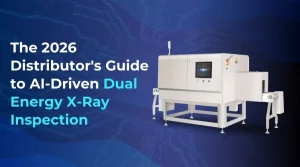
In the 2026 food landscape, food safety is not just an issue that sits on the periphery but rather it is sitting at the heart of brand (and industry) survival. Between the challenges of global supply chains and intensified scrutiny, an industrial X-ray inspection system is not just the final check; it’s a strategic asset. Based on 2025 year in review contamination data, foreign material recalls rose by 14% with glass/stones/calcified bone contributing to 62% of these. This spike has also led manufacturers to couple more than just a metal detector with the advanced Dual energy X-ray inspection system food standard.
At Easyweigh, we have spent years perfecting the intersection of physics and data. As a leading X-ray inspection machine OEM China, we have seen firsthand how the integration of an FDA approved food X-ray machine can safeguard a production line. This guide provides a technical blueprint for the modern factory, focusing on 0.1mm high resolution X-ray sensor technology, AI deep learning X-ray detection software, and the regulatory requirements of BRC food safety X-ray requirements.
2025 Year in Review: Why Single-Energy is Failing
The data from 2025 reveals a harsh truth: single-energy X-ray machines are struggling with “product effect.” In high-density products like cheese blocks or thick-cut meats, the density of the food itself often masks small contaminants. This gap in protection is why high-volume processors are pivoting toward the Dual energy X-ray inspection system food.
By utilizing two different X-ray energy spectrums, a Dual energy X-ray inspection system food can mathematically subtract the product signal. This allows for unparalleled bone detection in meat X-ray machine applications, where the bone’s density is nearly identical to the muscle fiber. Without this tech, the “giveaway” or “miss-rate” remains unacceptably high for modern HACCP compliant X-ray inspection.
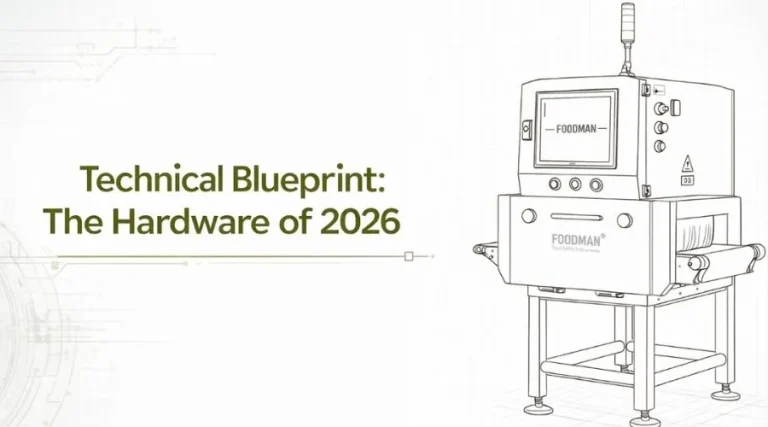
Technical Blueprint: The Hardware of 2026
The 0.1mm Resolution Revolution
To achieve top-tier sensitivity, the sensor is everything. Our latest 0.1mm high resolution X-ray sensor captures details that were previously invisible. When paired with TDI camera technology for food X-ray, the system can scan at high speeds without blurring the image.
TDI camera technology for food X-ray (Time Delay Integration) is essential because it stacks multiple exposures of the same object as it moves across the belt. This increases the signal-to-noise ratio, allowing a wholesale industrial X-ray scanners unit to detect a 0.1mm stainless steel wire inside a dense loaf of bread.
AI Deep Learning X-ray Detection Software
The most significant leap in 2026 is the transition from “threshold-based” detection to AI deep learning X-ray detection software. Traditional software looks for “dark spots.” Unfortunately, a fold in a plastic bag or a thick part of a chicken breast can look like a dark spot.
AI deep learning X-ray detection software learns the “geometry of a safe product.” It is trained on thousands of “clean” images. If an object appears that does not match the structural logic of the food—even if its density is low—the AI deep learning X-ray detection software flags it. This reduces false rejects by up to 80% compared to machines without an AI deep learning X-ray detection software core.
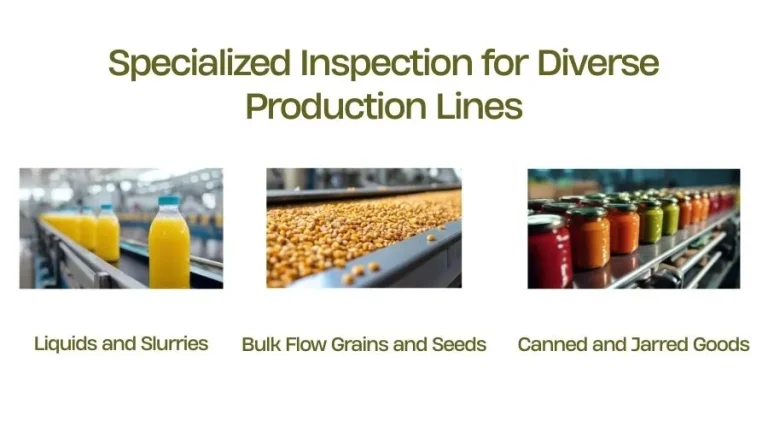
Specialized Inspection for Diverse Production Lines
1. Liquids and Slurries
For manufacturers of soups, sauces, or purees, a standard conveyor-based machine is insufficient. You require a pipeline X-ray inspection machine for liquids. These systems are integrated directly into the pumping line. A pipeline X-ray inspection machine for liquids must handle high-pressure washdowns and ensure that no air bubbles interfere with the AI deep learning X-ray detection software analysis.
2. Bulk Flow Grains and Seeds
When processing loose products like rice, nuts, or frozen vegetables, a bulk flow X-ray food scanner is the most efficient choice. A bulk flow X-ray food scanner handles high volumes by scanning the product as it falls in a “curtain.” As an X-ray inspection machine OEM China specialist, Easyweigh designs these with multi-lane rejectors to minimize the amount of good product lost during a contamination event.
3. Canned and Jarred Goods
Cans and glass jars are notoriously difficult because of their thick bases and metal lids. An X-ray foreign object detector for canned goods utilizes split-beam or side-view geometry to see “around” the lid and into the bottom corners. An X-ray foreign object detector for canned goods from a reputable food safety X-ray equipment distributor is the only way to ensure 100% coverage for glass-in-glass detection.
Compliance and Radiation Safety: The Global Standards
As a food safety X-ray equipment distributor, we are often asked about safety. Every FDA approved food X-ray machine we produce must meet strict international standards.
The Radiation Safety Certificate
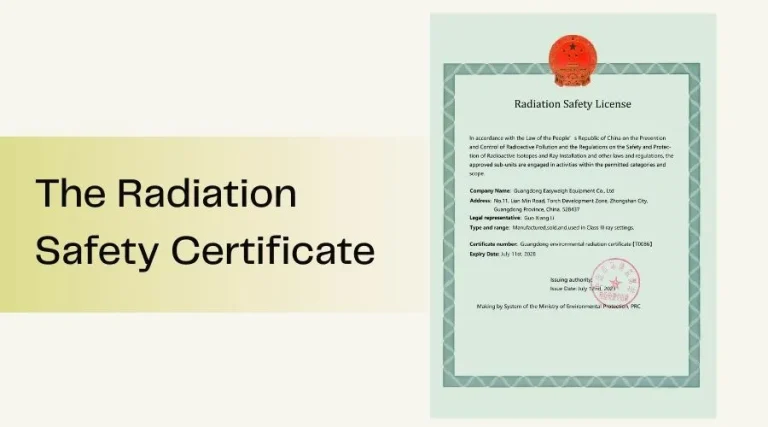
Every operator must be protected. Our machines provide a radiation safety certificate for X-ray scanner compliance, ensuring leakage is below 1 μSv/h. This is far below the natural background radiation we encounter daily. A radiation safety certificate for X-ray scanner is a mandatory document for any HACCP compliant X-ray inspection audit.
Meeting BRC and FDA Requirements
To maintain a “Grade A” audit, you must adhere to BRC food safety X-ray requirements. This includes digital logging of all rejects and regular sensitivity testing. Using an FDA approved food X-ray machine ensures that your equipment is built with food-grade materials and failsafe mechanisms that stop the belt if the X-ray beam fluctuates.
Procurement and TCO: Sourcing from an OEM
When looking for wholesale industrial X-ray scanners, the Total Cost of Ownership (TCO) is more important than the initial price.
Why Choose an X-ray inspection machine OEM China?
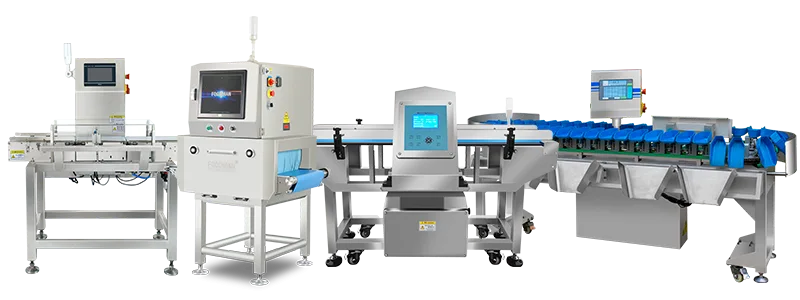
Sourcing from an X-ray inspection machine OEM China like Easyweigh offers a unique advantage. We are not just a food safety X-ray equipment distributor; we are the designers. This allows us to customize the AI deep learning X-ray detection software to your specific product. Whether you need a meat weight sorting machine manufacturer OEM to integrate weight grading with X-ray, or a standalone wholesale industrial X-ray scanners unit, the OEM route provides better long-term technical support.
| Parameter | Specification Goal for 2026 |
|---|---|
| Sensor Type | 0.1mm high resolution X-ray sensor |
| Camera Tech | TDI camera technology for food X-ray |
| Software | AI deep learning X-ray detection software |
| Safety | Radiation safety certificate for X-ray scanner |
| Compliance | FDA approved food X-ray machine |
How to Validate Your X-ray System Sensitivity
This process ensures your HACCP compliant X-ray inspection system is functioning at peak performance.
Required Tools:
Steps
The Future: Bone Detection in Meat X-ray Machine Technology
One of the greatest challenges for any meat manufacturer OEM is detecting small, flat bones in poultry. Traditional X-ray often misses these because they are not dense enough. However, the combination of a Dual energy X-ray inspection system food and a 0.1mm high resolution X-ray sensor has changed the game.
By analyzing the atomic number of the material, the Dual energy X-ray inspection system food can distinguish between the calcium in a bone and the protein in the meat. This level of bone detection in meat X-ray machine precision is why top-tier processors only trust a specialized food safety X-ray equipment distributor for their high-speed lines.
Conclusion
The “Ultimate 2026 Guide” is clear: success in food safety requires a synergy of hardware and intelligence. From the pipeline X-ray inspection machine for liquids on your processing floor to the X-ray foreign object detector for canned goods at the end of the line, every piece of equipment must be a HACCP compliant X-ray inspection powerhouse.
Easyweigh is more than a X-ray inspection machine OEM China; we are your partner in global compliance. Whether you are looking for wholesale industrial X-ray scanners or a custom X-ray inspection machine OEM China solution, our team provides the 0.1mm high resolution X-ray sensor technology and AI deep learning X-ray detection software required to lead the market.
Ready to secure your production line? Contact Easyweigh today to receive your custom quote for a Dual energy X-ray inspection system food and ensure your facility meets every BRC food safety X-ray requirements standard for 2026.
FAQs
Can I replace the conveyor belt without recalibrating the generator?
Efficiency on the factory floor is vital. Our wholesale industrial X-ray scanners feature a “Quick-Release” cantilever design. This allows operators to replace the 304 stainless steel food grade conveyor belt in under 5 minutes without tools and without needing to recalibrate the X-ray beam or the Algorithm. This minimizes downtime during sanitation or maintenance cycles on your high-speed steak portioning and sorting line.
Is the radiation leakage below 1 μSv/h for operator safety?
Yes. Safety is a non-negotiable parameter for any FDA approved food X-ray machine. Our systems are engineered with lead-shielded tunnels and internal safety interlocks to ensure radiation leakage is significantly below 1 μSv/h. Every machine we ship as a food safety X-ray equipment distributor includes a valid radiation safety certificate for X-ray scanner to ensure you meet all local and international safety audits.
Does Easyweigh provide a remote cooling system for high-temperature environments?
Yes. For plants operating in ambient temperatures above 35°C, we provide an integrated or remote Cooling System. This keeps the internal electronics and the generator at a stable temperature, preventing the “drift” in Detection Sensitivity that often plagues cheaper machines. This is a critical feature for any food safety X-ray equipment distributor selling into tropical or high-heat processing zones.