Introduction
The global meat industry is currently navigating a pivotal era. As we move through 2026, the demand for transparency, precise quality control, and unwavering food safety has reached an all-time high. For meat processors, the challenge is twofold: ensuring that no physical hazards in food reach the consumer and optimizing yield through precise fat management.
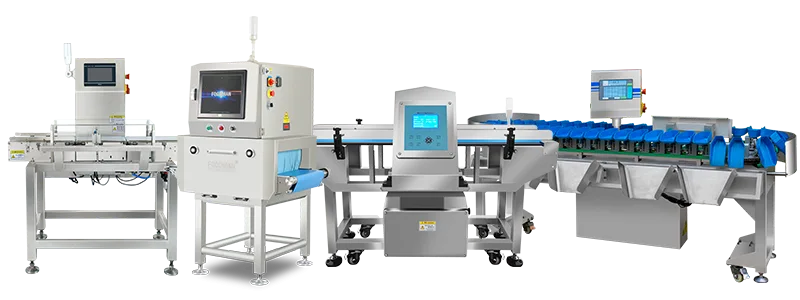
At Easyweigh, we’ve observed that the most successful facilities are no longer relying on outdated metal detectors or single-energy X-ray scanners. Instead, the Industrial Food X-Ray Inspection System—specifically those utilizing Dual Energy X-Ray (DEXA) technology—has become the gold standard.
In this comprehensive guide, we will explore how x ray food inspection systems are transforming the industry, the technical parameters that define success, and why Hygienic Design Meat X-Ray systems are a non-negotiable asset for the modern plant.
The Shift to Dual Energy X-Ray (DEXA) in 2026
For decades, single-energy X-ray was the standard. However, single-energy systems often struggle with the complex, varying densities of meat. A thick piece of beef might look as dense as a bone to a basic scanner, leading to “false rejects.”
What is Dual Energy X-Ray (DEXA)?

Dual Energy X-Ray (DEXA) works by using two distinct X-ray energy spectrums to scan the product. By comparing how the product absorbs these different energy levels, the system can differentiate between “good” product (lean meat and fat) and “bad” contaminants (bone, stone, or glass), regardless of the meat’s thickness.
Case Study Highlight: In a recent implementation at a high-volume pork processing facility, Easyweigh’s DEXA system achieved Bone Detection limits of 0.1mm for calcified fragments in high-opacity shoulder cuts. This level of precision reduced product rework by 22% compared to their previous single-energy x ray food inspection equipment.
Targeting Physical Hazards: Meat Bone Detection X-Ray

When asking “what are physical hazards in food,” most people think of metal. While metal is a concern, for meat processors, the most dangerous and frequent hazard is bone fragments.
An advanced Meat Bone Detection X-Ray system is designed to catch:
- Calcified bone fragments (even at high speeds).
- Glass shards from overhead lighting or jars.
- High-density plastics and rubber from gaskets.
- Mineral stones often found in bulk raw materials.
By acting as a comprehensive X-Ray Foreign Body Detector, these machines ensure that your brand is protected from the catastrophic costs and reputational damage of a product recall.
Optimizing Yield: The X-Ray Chemical Lean (CL) Analyzer
In 2026, meat is traded based on its “Chemical Lean” (CL) value. Traditionally, processors relied on “Soxhlet” lab testing, which is slow and only samples a tiny fraction of the batch.The modern X-Ray Chemical Lean (CL) Analyzer changes the game by providing an Online Fat Analyzer that scans 100% of the product in real-time.
The Power of DEXA Fat Analysis

Using DEXA Fat Analysis, processors can achieve:
- CL Accuracy: Reaching standards of ±1CL
Real-time Fat Correction: Integrating with blenders to automatically adjust the fat-to-lean ratio.
Meat Trimmings Fat Analysis: Ensuring that the expensive trim you buy or sell meets the exact contract specifications.
Ground Meat Fat Control: Maintaining consistency in retail-ready ground beef or sausage production.
System Configurations: From Bulk Flow to Pipeline
Every facility has unique needs. Whether you are inspecting canned food x-ray inspection lines or raw bulk trimmings, there is a specialized x ray for food inspection configuration.
Ideal for raw trimmings or loose products before they are packaged. A Bulk Flow X-Ray Meat system handles massive Throughput (up to 50+ tons per hour) while maintaining high sensitivity.
For products like sausage meat, poultry paste, or ground beef being pumped through a line, x-ray inspection of food through a pipeline is essential. The Pipeline X-Ray for Meat Pump detects contaminants within the flow, protecting downstream equipment like injectors or stuffers.
Canned Food X-Ray Inspection
Inspecting through metal cans or jars requires high-power generators. Modern canned food x-ray inspection systems can “see through” the container to find glass or metal contaminants at the bottom or sides.
Engineering for Sanitation: IP69K Washdown X-Ray

In the meat industry, hygiene is everything. A machine that cannot be cleaned is a liability. This is where Hygienic Design Meat X-Ray comes into play.
A DEXA CL Analyzer IP69K rated system features:
- IP69K Washdown X-Ray: Capability to withstand high-pressure, high-temperature (up to 80°C) water jets.
- FDA Approved Materials: Ensuring all contact surfaces are safe.
- Open Design Easy Cleaning: No hidden “bug traps” where bacteria like Listeria can grow.
How to Choose and Implement an X-Ray System?
To help your engineering team, here is a step-by-step approach to implementing a food safety X-ray equipment distributor's solution.
Steps
The ROI of Advanced X-ray Inspection
When you partner with a leading food safety X-ray equipment distributor, you aren’t just buying a machine; you’re investing in your bottom line.
| Feature | Financial Impact |
|---|---|
| ±1CL Accuracy | Maximizes profit by minimizing "lean giveaway." |
| 0.1mm Bone Detection | Reduces litigation and recall insurance premiums. |
| IP69K Stainless Design | Reduces cleaning time by up to 30% per shift. |
| Low Density Contaminant Detection | Protects downstream grinders and cutters from damage. |
Conclusion
As a premier food safety X-ray equipment distributor, Easyweigh is dedicated to providing the most advanced x ray food inspection equipment on the market. From Pipeline X-Ray for Meat Pump to the high-capacity DEXA CL Analyzer IP69K, our systems are engineered for the rigors of 2026 meat processing.
Don’t let physical hazards in food or inaccurate fat levels hold your business back. Embrace the future of x-ray product inspection and secure your place at the top of the global market.
Ready to upgrade your line? Contact our experts today for a custom consultation on Industrial Food X-Ray Inspection System solutions tailored to your facility.
FAQs
What are the primary benefits of x-ray inspection of food through a pipeline?
X-ray inspection of food through a pipeline is critical for liquids, pastes, and ground meat products. Unlike bulk inspection, pipeline systems scan the product while it is being pumped, allowing for the detection of contaminants like bone fragments or metal before the product reaches the final packaging or expensive downstream equipment like injectors. This ensures that xray food safety is managed at the most efficient point in the production line.
Can canned food x-ray inspection detect contaminants through metal containers?
Yes. canned food x-ray inspection is one of the strongest use cases for this technology. While traditional metal detectors are blinded by the metal can itself, x ray for food inspection systems “see through” the aluminum or steel to identify glass, stones, or high-density plastics inside. Advanced xray inspection systems for cans also verify fill levels and headspace simultaneously.
How does food x-ray inspection equipment differ from traditional metal detectors?
While metal detectors are limited to finding metallic hazards, food x-ray inspection equipment identifies a much broader range of materials. It functions as a comprehensive x-ray product inspection tool that detects glass, calcified bone, stones, and high-density rubber. Additionally, x ray food inspection systems are not affected by “product effect” (salt or moisture content), which often causes false rejects in metal detectors.