Introduction
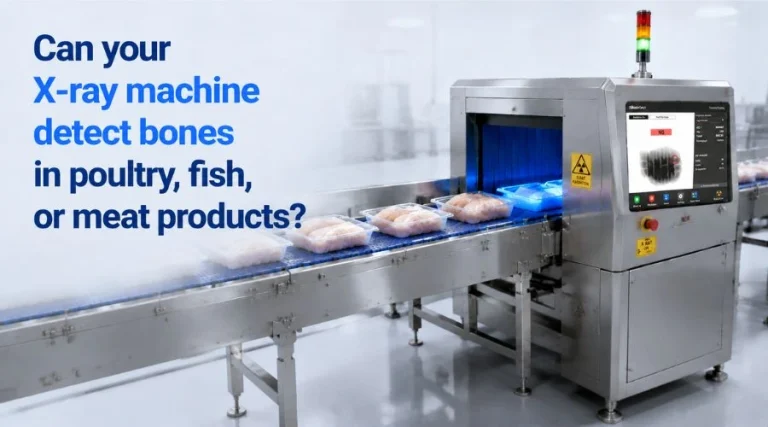
In the high-stakes world of protein processing, the question isn’t just “can it detect metal?” but “can your x-ray machine detect bones that are nearly the same density as the product itself?” At Easyweigh, we understand that a single bone fragment in a “boneless” chicken breast or a needle-thin pin bone in a salmon fillet can lead to a catastrophic recall, legal litigation, and a destroyed brand reputation.
As we navigate 2026, the food x-ray inspection equipment landscape has shifted. We are no longer just looking for “blobs” on a screen; we are utilizing x-ray technology in low-density food inspection to find microscopic calcified hazards. This comprehensive guide explores how an advanced food x-ray machine achieves what was once thought impossible.
The Evolution of Poultry Bone Detection X-ray
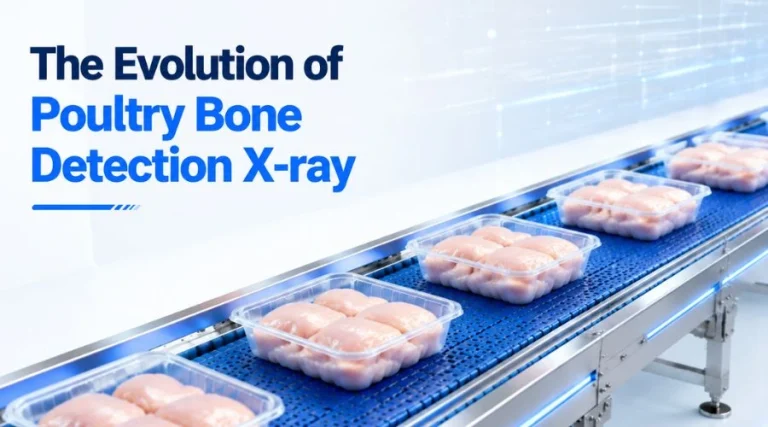
Poultry processing is notoriously difficult for food x-ray detection. Why? Because young chickens have bones that are not yet fully calcified. These “soft bones” have a density very close to the surrounding muscle, making poultry bone detection x-ray a significant engineering challenge.
Chicken Bone Fragments: The "Soft Bone" Dilemma
Traditional x-ray food inspection systems often struggle with wishbones or rib fragments in poultry. However, Easyweigh’s latest food x-ray inspection systems utilize Dual-Energy technology. By using two different energy levels, the x-ray detection system can differentiate between the protein and the bone by analyzing how each material absorbs high vs. low-energy photons.
Case Study
A major poultry processor in Georgia recently upgraded to our food x-ray machine. Before the upgrade, their “False Reject Rate” (FRR) was 4% due to product overlap. With our new x-ray inspection for food industry solution, we reduced the FRR to 0.5% while maintaining a poultry bone detection x-ray sensitivity of 1.0 mm for calcified bone.
The Challenge of Fish Pin Bone Detection
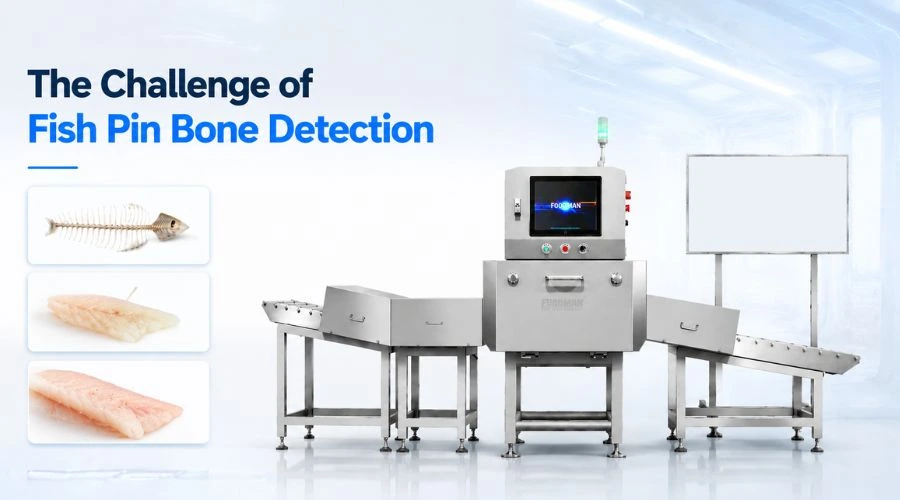
If poultry is hard, fish is an art form. Fish pin bone detection requires a food inspection with x-ray setup that can identify bones as thin as a human hair.
Overcoming Low Density with Advanced Sensors
When performing food x-ray inspection on salmon or whitefish, the x-ray technology in low-density food inspection must be incredibly sensitive. The x-ray inspection machine must scan at high resolutions to catch “floating” pin bones.
Problem: Standard food x-ray detection misses bones that are not aligned perfectly with the beam.
Solution: Easyweigh’s food x-ray inspection systems use multi-view geometry and AI-enhanced software to catch bones regardless of their orientation.
Minced Meat Inspection & Overlap Challenges
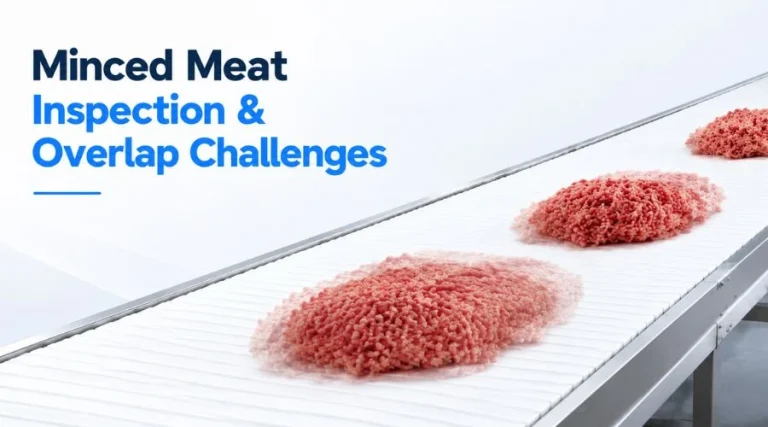
Whether you are producing hamburger patties or sausage meat, minced meat inspection presents “The Overlap Challenge.” When meat is piled high on a conveyor, food x-ray packaging becomes thick, and traditional x-ray food inspection beams can’t penetrate or distinguish a bone hidden under 4 inches of meat.
Better Detection: This setup allows the x-ray inspection systems to find bone, glass, and metal with much higher accuracy than inspecting the finished x-ray packaged food.
Integration: Our x-ray inspection of food through a pipeline units integrate directly with your stuffer or clipper, ensuring food x-ray safety before the product even hits the package.
Packaged and Canned Food X-ray Inspection
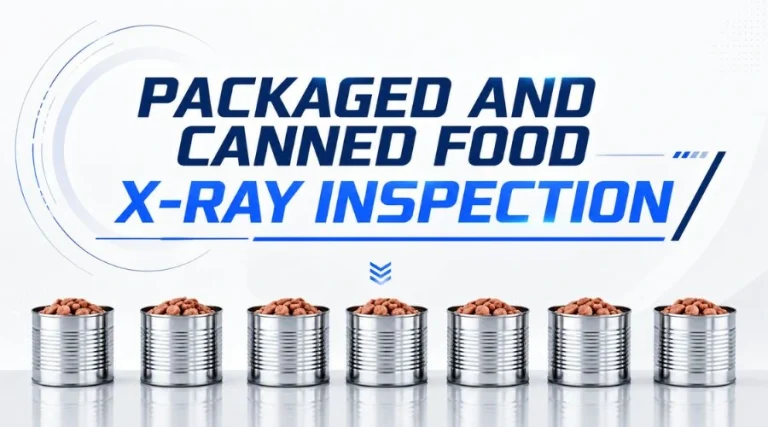
Once the meat product is in the box or can, the x-ray food packaging itself adds another layer of density that the food x-ray machine must “subtract.”
Canned Food X-ray Inspection
Canned food x-ray inspection is a specialized field. The x-ray inspection system must scan through the metal or tin can to find contaminants. Because the can is dense, a high-power food x-ray inspection equipment generator is required. Our canned food x-ray inspection units utilize side-viewing beams to check for contaminants at the bottom of the meat can where they are most likely to settle.
X-ray Packaged Food & X-ray Metal Detector Synergy
In many lines, an x-ray metal detector combination is used. While a standard x-ray metal detector is great for ferrous metals, a dedicated food x-ray inspection system can also find glass, stone, and bone inside x-ray packaged food like foil pouches or metal-film bags.
How to Optimize Your X-ray Inspection Line
Adding a food x-ray inspection unit is a capital investment. Here is how to ensure you get the best ROI and Throughput speed.
Step 1: Determine Your Critical Control Points (CCP)
Decide if you need food x-ray inspection at the beginning (bulk) or the end (packaged) of the line. For bone detection, bulk inspection is usually more accurate.
Step 2: Balance Throughput Speed with Sensitivity
High Throughput speed can sometimes reduce food x-ray detection sensitivity. Easyweigh machines are designed to maintain a Throughput speed of 120 meters/minute without losing the ability to detect 1.0mm bone fragments.
Step 3: Integrate an X-ray Checkweigher
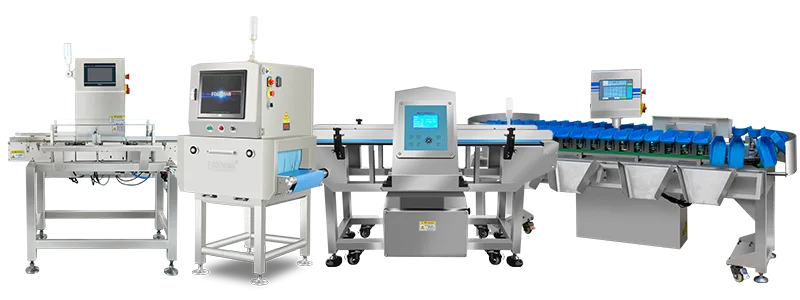
To save floor space, use an x-ray checkweigher. An x-ray checkweigher combines contaminant detection with weight verification. This x-ray checkweigher approach ensures that every x-ray packaged food item is both safe and correctly labeled for weight.
Step 4: Use FDA/CE Certified Systems
Ensure your food x-ray inspection equipment meets x-ray food industry standards. Every food x-ray machine we sell is CE and FDA compliant, ensuring your food x-ray packaging meets global export requirements.
Comparing Inspection Technologies
| Feature | Standard Metal Detector | Food X-ray Machine | X-ray Checkweigher |
|---|---|---|---|
| Detects Metal | Yes | Yes | Yes |
| Detects Bone | No | Yes | Yes |
| Detects Glass/Stone | No | Yes | Yes |
| Checks Weight | No | No | Yes |
| IP69K Washdown | Yes | Yes | Yes |
The Easyweigh Advantage: X-ray Technology in Low-density Food Inspection
Why choose Easyweigh as your x-ray inspection for food industry partner? Our focus on x-ray technology in low-density food inspection means we specialize in the “hard to find.”
Our x-ray detection system utilizes:
AI Filters: To distinguish between a chicken knuckle and a dangerous bone shard.
Robust Generators: Our food x-ray units are built for 24/7 operation in harsh environments.
Data Traceability: Every food x-ray inspection image is logged, providing an airtight audit trail for your x-ray food industry compliance.
Final Summary on Food X-ray Inspection Systems
The ability to detect bones in meat, poultry, and fish is the hallmark of a high-quality food x-ray machine. By utilizing x-ray technology in low-density food inspection, processors can overcome overlap challenges and maintain high Throughput speed. Whether you need canned food x-ray inspection, x-ray inspection of food through a pipeline, or an integrated x-ray checkweigher, Easyweigh provides the food x-ray inspection equipment needed to protect your customers and your company.
Don’t settle for “good enough” food inspection with x-ray. Invest in a system that answers the question “can it detect bone?” with a resounding YES.
FAQs
How does x-ray technology in low-density food inspection detect poultry bone fragments?
The challenge with poultry bone detection x-ray is that young chicken bones have low mineral content. Easyweigh utilizes x-ray technology in low-density food inspection (specifically Dual-Energy DEXA) to analyze the ratio of high-to-low energy photon absorption. This allows the food x-ray inspection systems to distinguish between the soft tissue of the meat and the slightly denser “soft” bones, achieving detection levels that a standard x-ray metal detector or single-energy system would miss.
Can a food x-ray machine identify fish pin bones in salmon or whitefish?
Yes, but it requires high-resolution sensors and advanced algorithms. Fish pin bone detection is one of the most difficult applications for food x-ray inspection equipment. Our food x-ray machine uses a high-definition 0.4mm diode array to capture the fine, needle-like structure of pin bones. This food x-ray detection capability is enhanced by AI that recognizes the specific “linear” shape of bones against the organic texture of the fish.
What is the benefit of x-ray inspection of food through a pipeline versus packaged food?
X-ray inspection of food through a pipeline is superior for minced or liquid products (like sausage meat or poultry paste). By performing food inspection with x-ray while the product is in a uniform flow, you eliminate the “overlap challenges” found in x-ray packaged food. This results in much higher food x-ray detection sensitivity because the food x-ray machine is scanning a consistent thickness without the interference of food x-ray packaging or air pockets.